Monday, July 10, 2006

incomplete abortion

Definition:
In an incomplete abortion , parts of the fetus or placental material is retained within the uterus. Typical symptoms include vaginal bleeding and lower abdominal cramping.

In most cases, a surgical intervention called curettage is performed to remove the remaining material from the uterus. The goal of this treatment is to prevent prolonged bleeding or infection.


Background: The most common complication of pregnancy is spontaneous abortion, which occurs in an estimated 10-15% of pregnancies. Spontaneous abortions are categorized as threatened, inevitable, incomplete, complete, or missed. Spontaneous abortions can be classified further as sporadic or recurrent. By definition, an incomplete abortion is the partial expulsion of the products of conception before the 20th week of gestation.


Pathophysiology: The timing of miscarriage suggests the pathophysiology of a spontaneous abortion. Genetic anomalies (eg, trisomies); hormonal abnormalities; and infectious, immunologic, and environmental factors usually result in first-trimester pregnancy loss. Anatomic factors usually are associated with second-trimester pregnancy loss. Factor XIII deficiency and a complete or partial deficiency of fibrinogen are associated with recurrent spontaneous abortions.


Frequency:


In the US: Many pregnancies are not viable. According to estimates, 50% of pregnancies terminate spontaneously before the first missed menstrual period; these abortions usually are not clinically recognized. Spontaneous abortion typically is defined as a clinically recognized (ie, by blood test or ultrasound) pregnancy loss before 20 weeks' gestation.
Mortality/Morbidity: Surveillance data from 1987 through 1990 reveal a total of 1459 pregnancy-related deaths in the US. Spontaneous and induced abortions accounted for 5.6% of these deaths.

Race: Surveillance data for pregnancy-related deaths from 1987 through 1990 demonstrate more deaths due to ectopic pregnancy and spontaneous and induced abortion among African American women than among Caucasian women. Fourteen percent of pregnancy-related deaths among black women were due to ectopic pregnancies; 7% were due to abortions. Among white women, data show that 8% of pregnancy-related deaths were due to ectopic pregnancies; 4% were due to abortions.

Age:

Age and increased parity affect a woman's risk of miscarriage. In women younger than 20 years, miscarriage occurs in an estimated 12% of pregnancies. In women older than 20 years, miscarriage occurs in an estimated 26% of pregnancies.
Age primarily affects the oocyte. When oocytes from young women are used to create embryos for transfer to older recipients, implantation and pregnancy rates mimic those seen in younger women. The number of miscarriages and chromosomal anomalies decreases, suggesting that the uterus is not responsible for poor outcomes in women of advanced reproductive age.

History: Although classified as different entities, incomplete and inevitable miscarriages present in a similar clinical fashion and have similar treatment. An inevitable abortion involves continuous and progressive dilation of the cervix without expulsion of the products of conception before the 20th week of gestation.

The patient history should include the following:
Last menstrual period (LMP)
Estimated length of gestation
Ultrasound results, if previously performed
Bleeding (eg, degree, duration, presence/passage of tissue): Bleeding may be quantified roughly by the number of pads soaked per hour or day. An average pad absorbs approximately 20-30 mL of blood.
Physical:

Vital signs should be within reference ranges unless infection is present or hemorrhage has caused hypovolemia.
The abdomen usually is soft and nontender.
On pelvic examination, products of conception may be partially present in the uterus, may protrude from the external os, or may be present in the vagina. Bleeding and cramping usually persist.
The cervix appears dilated and effaced.
Bimanual examination reveals an enlarged and soft uterus.
Causes:

Genetic factors

Approximately 5% of spontaneous abortions occur because of genetic factors.

Trisomy chromosomes commonly are encountered, with trisomy 16 accounting for approximately a third of chromosomal abnormalities in early pregnancy.
Anatomic factors: Congenital or acquired anatomic factors are reported to occur in 10-15% of women who have recurrent spontaneous abortions.
Congenital anatomic lesions include müllerian duct anomalies (eg, septate uterus, diethylstilbestrol [DES]-related anomalies). Müllerian duct lesions usually are found in second-trimester pregnancy loss.
Anomalies of the uterine artery with compromised endometrial blood flow are congenital.
Acquired lesions include intrauterine adhesions (ie, synechiae), leiomyoma, and endometriosis.
Endocrine factors

Endocrine factors potentially contribute to recurrent abortion in 10-20% of cases.
Luteal phase insufficiency (ie, abnormal corpus luteum function with insufficient progesterone production) is implicated as the most common endocrine abnormality contributing to spontaneous abortion.
Hypothyroidism, hypoprolactinemia, poor diabetic control, and polycystic ovarian syndrome are contributive factors in pregnancy loss.
Infectious factors
Presumed infectious etiology may be found in 5% of cases.
Bacterial, viral, parasitic, fungal, and zoonotic infections are associated with recurrent spontaneous abortion.
Immunologic factors
Immunologic factors may contribute in up to 60% of recurrent spontaneous abortions.
Both the developing embryo and the trophoblast may be considered immunologically foreign to the maternal immune system.
Antiphospholipid antibody syndrome generally is responsible for more second-trimester pregnancy losses than first-trimester losses.
Miscellaneous factors
Miscellaneous factors may account for up to 3% of recurrent spontaneous abortions.
Other contributing factors implicated in sporadic and recurrent spontaneous abortions include environment, drugs, placental abnormalities, medical illnesses, and male-related causes.


Lab Studies:


Complete blood count with differential
Blood type and Rh factor
Qualitative and quantitative human chorionic gonadotropin-beta
Factor XIII and fibrinogen
Imaging Studies:


Ultrasound is useful in evaluation of incomplete abortion.
An incomplete abortion may demonstrate a variety of sonographic findings as follows:
The gestational sac may be misshaped or collapsed, or it may be intact, containing a nonliving embryo. In addition, an irregular complex mass within the endometrial or endocervical canal may be present.
Echogenic material or debris within the endometrial canal may represent retained products of conception or clotted blood.
First-trimester molar pregnancies may simulate an incomplete abortion, with echogenic material within the endometrial cavity that has no characteristic vesicles or cysts.
Intrauterine fluid collections may represent pseudogestational sacs found in ectopic pregnancies.
Studies suggest no statistically significant relationship between the initial presence of a gestational sac or endometrial thickness and the success rate or expectant management.
Procedures:


Transabdominal ultrasound of the pelvis provides an overall view of the pelvic structures. A full bladder is required as a sonographic window.
Endovaginal ultrasound gives a detailed view of the endometrium of the uterus, ovaries, adnexa, and cul-de-sac. An empty bladder is required for optimal imaging.


Prehospital Care:

Maintain routine universal precautions in view of potentially heavy vaginal bleeding.
Encourage the patient to bring any passed tissue to the hospital for evaluation.
Emergency Department Care:

Treat all patients with vaginal bleeding of any etiology as follows:
Determine hemodynamic stability and treat instability.
Determine pregnancy status (qualitative and quantitative).
Pelvic ultrasonography may be useful in clinically classifying spontaneous abortion. Determination of Rh status and hematocrit usually is indicated.
In most cases, vacuum or suction curettage can be performed in the outpatient setting or the ED.
The treatment goal is evacuation of the uterus to prevent complications such as further hemorrhage and/or infection.
Consultations:

Obstetrics/gynecology consultation is indicated.


Further Inpatient Care:


If bleeding cannot be controlled in the ED, transfer the patient to the operating room (OR) for examination. Anesthetize the patient and perform uterine evacuation.
Further Outpatient Care:


After curettage, observe the patient for 4-6 hours. If stable, the patient can be discharged.
Administer the standard dose of Rho(D) immune globulin (ie, 300 mcg) to women who are Rh-negative to prevent Rh immunization.
Send products of conception for pathologic evaluation.
Complications:


Potential complications include septic abortion and hypovolemic or septic shock.
Preexisting anemia may make patients more susceptible to hypovolemic shock.
Patients with HIV infection who are undergoing curettage may have a higher rate of procedure-related complications but no increase in infectious morbidity.
Prognosis:


The prognosis for a successful pregnancy depends upon the etiology of previous spontaneous abortions.
Correction of an endocrine abnormality in women with recurrent abortion has the best prognosis for a successful pregnancy (>90%).
In women with an unknown etiology of prior pregnancy loss, the probability of achieving successful pregnancies is 40-80%.
The live-birth rate after documentation of fetal cardiac activity at 5-6 weeks of gestation in women with 2 or more unexplained spontaneous abortions is approximately 77%.
Patient Education:


Advise patients to return to the ED upon occurrence of symptoms such as the following:
Profuse vaginal bleeding
Severe pelvic pain
Temperature above 38°C (100.4°F)
Patients may experience intermittent menstrual-like flow and cramps during the following week. The next menstrual period usually occurs in 4-5 weeks.
Patients can resume regular activities when able but should refrain from intercourse and douching for approximately 2 weeks

Tuesday, July 12, 2005

The Triad of Health Promotion

Prevention, Health Education, and Health Protection, otherwise known as the Triad of Health Promotion, should be viewed as interlocking spheres of activity. The three are inter-related with each other and each plays a vital role in the achievement of individual and community health.

The triad has seven domains that

Tuesday, May 03, 2005

nursing as an art

The Therapeutic Relationship - Research and Theory

The client-therapist relationship is important both as a primary element of therapy (an effective element of therapy in and of itself) and as a supportive or secondary element of therapy (an effective element of therapy through secondary effects).

Various studies (e.g. Smith & Glass, Shapiro & Shapiro) have indicated that psychotherapy is effective. While these studies are based on meta-analytic reviews which have their own limitations, the findings seem solid. Psychotherapy is effective for approximately 2/3s to 3/4s of the people that seek it.

The question of "Which is the more important, the technique or the relationship?" in psychotherapy has been debated over the years (e.g. Strupp, 1972; Garfield, 1972). Bowers and Clum (1988) attempted to form some answer to this question by reviewing studies which compared therapies with a technique focus, therapies with a relationship focus (placebo therapy), and therapies with both. Overall they found that therapy with both relationship and technique focus had an effect size of .76, while therapy with technique focus only had an effect size of .55. Thus, they concluded, that the non-specific factors of therapy, the relationship focused therapy, contributes .21 to the effect size, while technique contributes .55 to the effect size, giving the obtained effect size of .76 overall. Thus, the question of "Which is the more important, the technique or the relationship?" in psychotherapy has been answered to some extent, because empirical data supports that both contribute to the effectiveness of psychotherapy. The therapeutic relationship has effectiveness at least as a primary element of therapy; it contributes a unique piece of variance to the effectiveness of therapy.

The therapeutic relationship also has effectiveness as a secondary element of therapy. Many (Strupp, 1992; Van Denberg & Van Denburg, 1992) note that the relationship may be involved in a client's feelings about therapy and his/her decisions to terminate therapy. Van Denburg & Van Denburg (1992) note that Kohut believed that often premature termination resulted from empathic breaches, or failures in empathy. They notes that others have suggested that premature termination occurs from too strong negative transference (Blanck & Blanck), fears of abandonment by and separation from the therapist (Mahler), and too strong feelings regarding dependence on the therapist (transference resistance - Freud). Thus, according to these theorists, the therapeutic relationship has at least secondary or preventative effects in therapy as a factor that is involved in client's beliefs and feelings about the effectiveness of therapy as well as maintenance of therapy services.

00000000000000000

The nurse-patient relationship is the foundation for caring practice. Caring is a force for protecting and enhancing patient dignity. The nurse affirms patients as persons rather than objects and assists them in making choices and finding meaning in their illness experience. Caring is a morally responsible action that takes place within the nurse-patient relationship. This caring action has its basis in the nurse’s responsibility and accountability to give safe and competent care when the patient is unable to care for the self. Nurse caring differs from other caring professions in that a nurse’s time with patients spans a twenty-four hour period, involves the use of touch, and includes being in another’s intimate space. Examples of caring action include but are not limited to the physical care of the body that promotes comfort and healing, health and medication teaching, listening, and psychological and spiritual support.

Caring about others begins with caring about the self and other nurses. Caring is learned by experiencing caring practices among faculty and students which cultivates sensitivity to self and others. The student learns the basic constructs of caring including but not limited to comfort, compassion, concern, empathy, helping behaviors, nurturance, support, involvement, and sharing. A second dimension of caring involves the actual "caring for". Caring for refers to providing for or being responsible for another in a competent manner.

The nursing process is a critical thinking tool that provides the structure for caring action. The patient/family needs are assessed according to Maslow's hierarchy of needs. The structure of the nursing process, Maslow's hierarchy of needs and Gordon’s Functional Health Patterns, form the standards by which critical thinking skills are developed by the student throughout the curriculum.

The assessment phase of the Nursing Process includes the use of multiple sources to collect pertinent data and is related to Gordon's Functional Health Patterns. This database is next analyzed for the purpose of identifying patient needs and their hierarchy according to Maslow. From this analysis NANDA nursing diagnoses are established. Based on each nursing diagnosis, NOC outcomes and specific patient outcomes are identified and an individualized plan of NIC interventions is developed to meet patient needs. The implementation step involves the actual carrying out or administering of the nursing orders or collaborative actions based on priorities of care. Evaluation of patient outcomes, based on identified goals as the criteria for evaluation, help the nurse to judge the success of nursing care. Based on the evaluative process, the nurse becomes aware of a need for revision and modification of the plan of care. Thus the nursing process is viewed as dynamic and continuous.

The nursing arts and scientific knowledge, which are consistent threads throughout the curriculum, serve as a standard for critical thinking throughout course content. Criteria necessary to carry out the nurse-patient relationship are communication and interpersonal skills, which convey a respect and a professional responsibility for all.

The interplay of man, health, and environment serves as the context in which the nurse-patient relationship exists. Man is viewed as a human being who is a unique biopsychosocial, cultural, and spiritual individual who functions as a whole in response to internal and external cues in the physical and social environment. The concept of health is considered a dynamic state that includes all aspects of one's life: physical well-being, social interaction, emotional capacity, and spiritual well-being. Health promotion is a valued activity within the nursing role and includes the related concepts of wellness, primary, secondary and tertiary prevention. To achieve this end, the student is encouraged to be a role model of healthy behaviors and to teach health care strategies.

Health promotion concerns are those activities directed towards maintaining or enhancing the health and well being of individuals and their families. The student learns the role of patient advocate as he/she provides information needed to make health care decisions and then supports the patient in that decision. The student learns and teaches health practices that promote and enhance optimum functional levels of wellness. Such practices include, but are not limited to, nutrition, diet, exercise, drug therapy and complementary therapies.

The environment consists of two major components, the practice setting and those internal and external factors that the patient brings to the health care setting. The concept of environment is viewed as external to the person directly affecting health and well-being. Other externals include health care environment structures such as in- and outpatient settings, acute, sub-acute, long-term care, home and community care.

The culture of the practice environment, whether inpatient, outpatient or home care, is very complex. This complexity creates the need for collaboration between health care disciplines and services. Today's market driven health care system creates tension in the practice environment between our professional philosophy and the reality of cost containment and changing health policies. Multidisciplinary approaches are required for the planning and management of patient's needs within a cost-effective framework. In the process of educating future nurses, it is essential for the student to grasp how the impact of these external factors affects health care outcomes.

Together, the nurse with the patient, create a health promoting and healing environment. The nurse as presence, being there and with another in time of need applies critical thinking skills to bridge the gap between the technological aspects of care and the human responses to illness and disease. The nurse’s unique position in relation to the patient and family allows for facilitation of healing. In addition, the healing environment encompasses self-activity of the patient that incorporates complementary strategies to promote wellness. Healing practices are adapted to patients’ needs and particular health care settings. The support of family members and significant others is critical to the healing environment. Cultural diversity impacts the healing environment and nursing students learn to appreciate and respect this diversity.

The profession of nursing has a set of values that act as a standard to guide nursing behavior. The profession expects its members to know, understand, and internalize these values. The interaction of personal, professional and patient values enter into the process of decision making. In an effort to achieve sound ethical and legal decision-making, the faculty directs the student toward the formulation of professional values. Within this framework, the faculty emphasizes that students are directly accountable for their behavior.

Friday, March 11, 2005

bohol, philippines

Geography of Bohol
IJsselstein, Tuesday, 26 March 2002 05:12:34

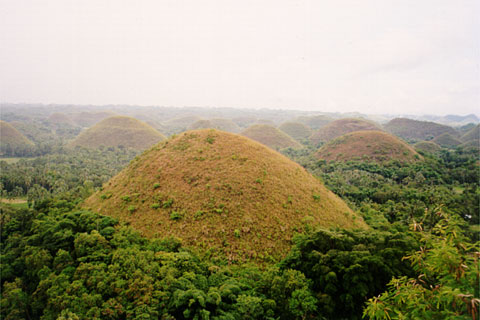
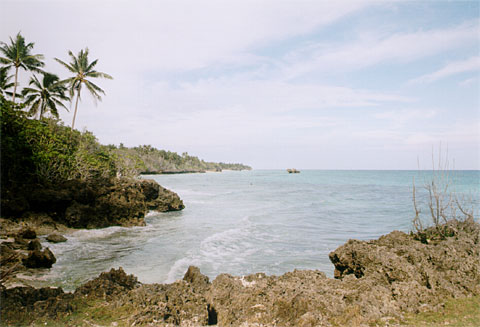
Bohol is an island located between latitude 9°30' and 10°15' North and Longitude 123°40' and 124°30' East.

With a land area of 4117.3 square kilometers, Bohol is the tenth largest island of the Philippines, and lies in the middle of the Visayas. Bohol is surrounded by other islands on all sides, and is thus shielded from the typhoons that often occur in the region, as well as from the heaviest rains.

Bohol is separated from Mindanao by the Bohol sea in the South and the island of Leyte by the Canigao Channel in the East. The Comotes sea in the North separetes Bohol from the Camotes Islands, and the Bohol Strait separates it from Cebu.



With its huge eyes, long tail, and hands and feet that must have inspired Steven Spielberg when he created E.T., the Philippine tarsier is almost Bohol's trademark. Still, few people have had the opportunity to have a close encounter with it.

The reason is twofold. Because it is a shy nocturnal animal that leads a mostly hidden life, it sleeps at daytime near the trunks of trees and shrubs deep in the impenetrable bushes and forests. They only become active at night, and even then, with their much better sight, and amazing ability to maneuver around trees are very well able to avoid us noisy humans well before we become aware of it's presence, so even when they were still present in abundance, the worlds of the tarsier and humans were mostly separated. But today, due to the quickly growing population, which causes more and more forests to be converted to farmland, housing areas and roads, the place where the tarsier can life it's secluded life is disappearing.

The tarsier is often claimed to be the world's smallest monkey -- however, this claim is somewhat dubious, since, although they are primates, technically, the tarsier is not a monkey. According to biology, it belongs to its own suborder under the primates, the prosimii or haplorrhini, while monkeys and apes belong to another suborder, that of the anthropods. Furthermore, even smaller primates have recently been in discovered on Madagascar: the adult pygmy mouse lemur weighs about 30 grams. But don't let this disillusion you, the Philippine tarsier is still a very special animal, well worth a day trip while you're on Bohol, and for some it is even the reason for their trip, and with an average 130 grams for an adult Philippine tarsier, it is still one of the smallest primates...

Although the species is believed to be about 45 million years old, and is perhaps one of the oldest land species to continuously live in the Philippines, it was only introduced to western biologists in the 18th century. The missionary J.G. Camel gave a description of the animal to J. Petiver, who published it in 1705, and named it the Cercopithecus luzonis minimus. Linneaus later renamed it to Simia syrichta, and later to the scientific name it still carries today: Tarsius syrichta. On Bohol, this little creature is known under a lot of names, often different from town to town, some of these local names are "mamag", "mago", "magau", "maomag", "malmag", and "magatilok-iok".

A Short History of Bohol (Part I)
IJsselstein, Thursday, 04 April 2002 04:44:43

Although people have been living on Bohol long before Magellan reached the islands that are now the Philippines, our written records start here, and about the events before that time, little is known, and has to be carefully reconstructed from oral traditions and archeological evidence.

It is said that around 1200, the Lutaos arrived from northern Mindanao. They build a settlement on stilts in the strait between mainland Bohol and the island of Panglao. This town later became a prospering local center of power, also known as the the "Kingdom of Dapitan." It lasted until it was abandoned in 1563, out of fear for raids by the Portuguese and their allies from Ternate. It will be seen below how this event helped the Spanish to get a foothold in the Philippines.

The Arrival of the Spanish
In 1521, Ferdinand Magellan and his crew were the first Europeans to reach the Philippines coming from the East. When they arrived they weren't really welcome: Magellan himself was killed on Mactan Island near Cebu, by the hand of a local chieftain or "Datu", Lapu Lapu.

Following Magellan's route, the Loaisa Expedition left La Caruña in Spain on 24 July 1525. This expedition also reached the Philippines, but on the first of June, 1526, a hurricane separated the ships. One of the ships, the Santa Maria del Parral, stranded on on the shore of North-East Mindanao. The survivors were captured and sold into slavery. One of the crew menbers, Sebastian de Puerto (or de Puerta), came in the hands of the Boholano chief Sikatuna. This is the first contact on record between a Spaniard and a Boholano.

More than forty years after Magellan's demise, in 1564, Spain sent out four expeditions to establish colonies in the Far East, and to pick up a share of the lucrative spice trade under control of the Portuguese. These expeditions failed, but in the next year, Miguel Lopez de Legazpi was more successful. Sailing westwards from Mexico with four ships and almost four hundred men, he reached the Philippines in the beginning of 1565, and established a Spanish settlement.

This wasn't an easy achievement. Just like Magellan before him, Legazpi met with hostile native warriors, who didn't like the idea of foreigers invading their islands. His attempt to land on the island of Cebu was twarted, and he decided to look for a friendlier place. He lifted his anchor and headed south in the direction of Mindanao. A change of wind, however, forced his fleet back to north in the direction of Bohol. With the help of a Mohammedan Malay pilot from a captured trading ship from Borneo, he learned that the Filipinos were involved in trade with the Moluccas, Borneo, Java, Malacca, and even far away places such as India and China.

The Blood Compact of Legazpi and Sikatuna
Also at Bohol, Legazpi was given a hostile welcome. From his Malay pilot, he learned that this hostility was due to maurading expeditions of the Portuguese. Coming from the Moluccas, the Portuguese raiders traversed the Visayan seas, and just a few years before, in 1563, had plundered Bohol and killed or enslaved about one thousand of its inhabitants. Of course, the Boholano's easily mistook the Spaniards for Portuguese.

Again with the help of his pilot, Legazipi explained two chiefs of Bohol, Datu Sikatuna of Bool and Datu Sigala of Loboc that they were not Portuguese, and had come in peace, and not to plunder or kill. This convinced the Kings to end their hostility and enter pact of friendship. On 16 March 1565 (or 25 March, records are confused due to the Georgian calender reform in 1584), Legazpi and Sikatuna performed the now famous blood compact, probably not far from the modern town of Loay. This event is still celebrated in Bohol every year in June with the Sandugo ("One Blood") festival. The same ceremony was repeated three days later with Sigala.

The Conquest of Cebu
After he assured himself of the aid of Sikatuna and Sigala, Legazpi decided to try to establish a permanent Spanish settlement on Cebu. With the native kings as guides, he lifted his anchor and left Bohol on Easter Sunday, and arrived at Cebu on 27 April 1565.

On the shore of Cebu, the local king Tupas already expected them. He had grouped his warriors in full battle array, ready to resist Legazpi and his invaders. In an attempt to negotiate a resolution of the impasse, a priest, father Urdaneta, went ashore, but he wasn't able to convince Tupas. Legazpi then initiated an attack. While the ship's artillery battered the coast, Spanish soldiers landed and attacked the Cebuano warriors. With their superior weapons the Spanish won a victory, and forced the troops of king Tupas to retreat to the hills.

After his defeat, king Tupas was more inclined to enter into peace negotiations. With the help of Cid Hamal, a Mohammedan Malay who stayed in Cebu at that time, a peace treaty was drawn up on the fourth of June 1565. In this treaty, king Tupas recognized the Spanish king as sovereign and agreed to pay a tribute, for which, in return, Legazpi promised to protect him against his enemies and to allow trade between the Filipinos and Spaniards. Also, Legazpi was granted a strategic site on Cebu, where he founded the first permenent Spanish settlement in the Philippines.

Establishment of Catholicism
In the footsteps of the Spanish explorers came the missionaries. About thirty years after the Spanish established themselves on Cebu, on 17 November 1596, two Jesuit priests, Father Juan de Torres and Gabriel Sanchez, arrived in Baclayon, Bohol. It is said that the mother of the encomendero of Bohol, Doña Catalina de Bolaños invited them. They established their headquarters in Baclayon, and quickly started to further spread the Catholic faith on the island.

Only a few years after the Jesuits' arrival, on 26 October 1600, Baclayon was raided by some 300 Maguindanao Moros commanded by Datu Sali and Datu Sirongan. In response, the Jesuits moved their headquarters to the inland town of Loboc, at a save distance from the coast. Since then, until the departure of the Jesuits from the Philippines in 1768, Loboc has been the residence of the local Jesuit superior. Here they also founded the first parish on the island in 1602, followed in 1604 by a school, the Seminario Colegio de Indios, a training school for the children of the local ruling class.

The Revolt of Tamblot
The new religion was not easily accepted by all. In the year 1621, Tamblot, a native priest or babaylan called upon the people to return to the faith of their forefathers, and to liberate themselves from the Spanish oppression. Around two thousand Boholanos joined him, and started a revolt when most of the Jesuit fathers where absent, celebrating the feat of the beautification of St. Xavier in Cebu.

When the news of the uprising reached Cebu, the alcalde-mayor Don Juan de Alcarazo, rushed an expedition to Bohol to supress it. on New Year's Day, 1622, an army of 50 Spaniards and over one thousand Filiponos started their campain against the rebels. In the following battle, fought out in a torrential rain at Malabago, Cortes, Bohol, the mayor was wounded and the Spanish had to retreat. Six months later, in a second attempt, the rebels where victorious again, but then some Spanish priests from Loboc managed to enter the camp of Tamblot and assasinate him. Then, Without their leader, the insurgents where easily defeated, and Spanish power was restored.

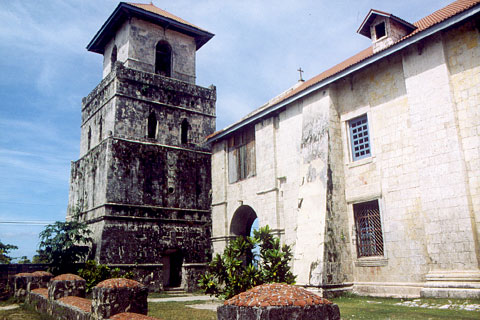
After these events, the Spanish more firmly established their power on Bohol. Using the labour of local workers, a number of magnificient stone churches where build, including the Church of Baclayon, which is one of the oldest stone churches in the Philippines, and was build, in its current shape in 1724, and the church of Loboc with its separate bell-tower.

By 1733, the Jesuits had established six settlements or reducciones: Loboc, Baclayon, Jagna, Talibon, Inabanga and Maribojoc. In these settlements, the people were forced to live together, so that it was easier to christianize them, as well as to collect taxes.

The Rebellion of Dagohoy
The oppressive methods of the Jesuits once more led to a serious insurrection against Spain. In the year 1744, Francisco Sendrijas alias Dagohoy started a revolt that was to last more than eighty nine years. The cause of this was an incident, in which the brother of Dagohoy was killed. Father Gaspar Morales, the Jesuit curate of Inabanga ordered a this brother, who was a constable, to capture a man who had left the Christian religion. The constable pursued the fugitive, but then was killed by him in a duel. However, when his body was brought back to town, the Jesuit refused the constable a Christian burial.

Infuriated at the priest, Francisco Dagohoy organised the people in an armed rebellion. The uprising started on 24 January 1744 with the killing of the Italian Jesuit curate of Jagna, Father Guiseppe Lamberti. Not long after that, Dagohoy also killed Father Morales, and the rebellion swept over the entire island. In vain, the Bishop of Cebu, Miguel Lino de Espeleta, attempted to calm down the situation, and restore Spanish rule. Dagohoy defeated the troops of Spanish and Filipino forces sent to subdue him. He established a free government in the mountains, and with his followers, was able to control much of the island. Even after Dagohoy's death, his rebellion continued, while the Spanish were only able to maintain their power in some settlements along southern coast.

In the span of 89 years, no less than twenty Spanish governors-generals, from Gasper de la Torre (1739-45) to Juan Antonio Martinez (1822-25), failed to surpress the uprising. In 1825, general Mariano Ricafort (1825-30), became governor-general of the Philippines. He send alcade-mayor Jose Lazaro Cairo to re-establish Spanish power in Bohol. With an army of 2,200 Spanish-Filipino men, he invaded Bohol on May 7, 1827. However, it took more than a year of fierce fighting, and another Spanish expedition under Capitain Manuel Sanz, who landed on Bohol in April 1828, before the patriots were defeated. He captured last remnants of Francisco Dagohoy's rebel forces from their hideout in the Cave of Caylagon. So, finally, by August 31, 1829, the rebellion was ceased. Most of the followers of Dagohoy were pardoned and resettled in new villages in the lowlands. These villages have now become the towns of Batuanan, Cabulao, Catigbian, and Vilar.

In the mean time, in 1768, the Jesuits had been expelled from the country, and their missions taken over by Augustinian Recollects headed by their former Provincial, Fray Pedro de Santa Barbara. Under their leadership, by 1800, the towns of Tagbilaran, Dimiao, Guindulman, Panglao and Loon had been founded.

A Short History of Bohol (Part II)
IJsselstein, Thursday, 04 April 2002 05:20:41


The Last Years of Spanish Rule
After the end of the Dagohoy rebellion, a period of relative peace starts in Bohol. During most of the Spanish era, Bohol was a part of the residencia of Cebu, but on 22 July 1854, it was made, together wit hthe island of Siquijor, into a separate politico-military province. In 1879, when a census was held, Bohol had 34 muncipalities and a total population of 253,103 souls. (Less than one fifth of the population today!)

Spanish rule came to an end in April 1899. In that year, after winning the American-Spanish war, the U.S. 'bought' the entire Philippines for twenty million dollars. The Spanish left the island, and Bohol became a "Gobierno de Canton," run by important Boholanos as part of the independent republic proclaimed by Emilio Aquinaldo.

The American Era
After almost one year, on 17 march 1900, American troops landed in Tagbilaran. Lead by Major Henry Hale of the 44th infantry Battalion, they came to take over control from the followers of Aquinaldo. The Boholanos started an organized resitance against the new invaders. On 3 September 1900, under the leadership of Col. Pedro Samson, a bloody struggle started, which lasted for several months. In their attempt to force the Boholanos to submission, the American forces burned to the ground 20 of Bohol's 35 towns, killed hundreds of people, and indiscriminately slaughtered livestock. Finally, on 23 December 1900, the resitance leaders surrendered to the Americans. A peace treaty was signed in the convent of Dimiao, and peace was restored. Unfortunately, a cholera epidemic following the turmoil of the war killed hundreds of Boholanos in the following year.

With the peace restored, the American government started to reorganize and reform much of the country. Roads were constructed and schools established, and the living conditions started to improve somewhat. It was also during this period, on 17 March 1917, that Bohol was created a separate province.

World War II
The American Era, effectively ended with the Second World War. On 17 May 1942, Japanese forces landed in Tagbilaran. Three very difficult years where to follow. Again, the Boholanos stood up to defend their freedom. The resistance movement, which constisted of disbanded soldiers and civilians, organized a guerilla style war against the Japanese oppression. At first, their headquarters, 'Behind the Clouds' was hidden in the deep and inaccessible ravines near Catigbian, and later this was moved to Carmen, while the original encampment remained a prisoners' camp.

The American forces returned on Bohol on April 11, 1945. This time, they were welcomed as liberators, and only to stay for a relative short time, as on the 4th of July, 1946, Bohol became a part of the independent Republic of the Philippines.

After Independence
After independence, a long period of relative peace and slow development started. Freedom loving and independent, Boholanos don't like to be ruled by others, and, unlike on many other islands in the Philippines, there are few large landowners or haciendas on Bohol. Many Boholano families were and still are subsistance farmers, who till their own small plots of land for their own food, and grow coconut trees for copra (dried coconut flesh), to earn money for their other needs. Although Bohol is still mainly an agricultural province, the capital Tagbilaran was elevated to a city on the first of July 1966, and today has a population of about 70.000 people. The entire province is now (according to the 2000 census) home to about 1.3 million people.

Like in many provinces in the Philippines, no longer all people can earn their livelyhood in agriculture, and many have sought a better future outside Bohol. Many have found work in the large banana and other plantations on Mindanao, or in the industry or in all types of service jobs in the big cities, especially Cebu and Manila. Boholanos are also well known as sailors. When on board a ship, both within the Philippines, or internationally, you have a big change that some of the crew members originally come from Bohol. Finally, a large number of Boholano's have moved abroad, to live and work in the Middle East, the United States, and Europe.

Only in recent years, the touristic potential of the island has been realized, and work has started to develop resorts and hotels to make Bohol's magnificient natural environment accessible for tourists.

The Philippine Tarsier
IJsselstein, Saturday, 24 April 2004 02:23:48

The Philippine tarsier, (Tarsius syrichta) is very peculiar small animal. In fact it is one of the smallest known primates, no larger than a adult men's hand. Mostly active at night, it lives on a diet of insects. Folk traditions sometimes has it that tarsiers eat charcoal, but actually they retrieve the insects from (sometimes burned) wood. It can be found in the islands of Samar, Leyte, Bohol, and Mindanao in the Philippines.

If no action is taken, the tarsier might not survive. Although it is a protected species, and the practice of catching them and then selling them as stuffed tarsiers to tourists has stopped, the species is still threatened by the destruction of his natural forest habitat. Many years of both legal and illegal logging and slash-and-burn agriculture have greatly reduced these forests, and reduced the tarsier population to a dangerously small size. If no action is taken now, the Philippine tarsier can soon be added to the list of extinct species.

Not "The World Smallest Monkey"
"The world's smallest monkey" is an often heard slogan. However, it is not a monkey. In truth, its classification is somewhat problematic. Some scienties consider tarsiers to be a taxonomic suborder among the primates. While, because they are closely related to lemurs, lorises and bushbabies, others classify them with the prosimians to which these animals belong. Monkeys and apes belong to the suborder of anthropoids. The complete taxonomic classification thus is:

Class Mammalia
Order Primates
Suborder Prosimii/Haplorrhini
Infraorder Tarsiiformes
Superfamily Tarsioidea


In the Philippines, three very similar species have been discribed. It is very well possible that these species are actually a single species, developed into three races due to the physical separation on the various islands.

Species Location
T. philippensis Samar and Leyte
T. fraterculus Bohol
T. carbonarius Mindanao


Outside the Philippines, a number of relatives of the Philippine tarsier can be found, among them the Bornean tarsier (Tarsius bancanus) of Borneo and Sumatra, the spectral tarsier (Tarsius spectrum), the lesser spectral tarsier or pygmy tarsier (Tarsius pumilus), and Dian's tarsier (Tarsius dianae) of Sulawesi, Indonesia. The pygmy tarsier, by the way, is considerably smaller than the Philippine tarsier, while the pygmy mouse lemur, found only in Madagascar, is now being recognized as the smallest primate in the world.

The tarsier was first introduced to Western biologists through the description given to J. Petiver by the missionary J.G. Camel of an animal said to have come from the Philippines (Hill, 1955). Petivel published Camel's description in 1705 and named the animal Cercopithecus luzonis minimus which was the basis for Linnaeus' (1758) Simia syrichta and eventually Tarsius syrichta. Among the locals, the tarsier is known as "mamag", "mago", "magau", "maomag", "malmag" and "magatilok-iok".

The species is believed to be about 45 million years old, dating back to the early Eocene period, and probably one of the oldest land species continuously existing in the Philippines.

Currently, the Philippine tarsier is categorized as a "lower risk, conservation dependent" species, which means that, although it is not yet categorized as vulnerable, endangered, or critically endangered, it could qualify for one of those categories within five years if the present protection programs are stopped.

Physical Description
General. The Philippine tarsier has a gray fur and a nearly naked tail. The middle finger is elongated. Head and body length are around 118-149 mm; It weighs 113-142 grams. Males are larger than females.

Eyes. In comparison with his body size, the eyes of the tarsier are enormous. In volume, the capacity of the bony eye orbits, or eye sockets, is larger than that of the brain case, and also larger than its stomach. Their eye sockets have post-orbital closure rather than the postorbital bar of the prosimians. This feature keeps the eyeballs from being pressed against by the powerful temporal muscles to their sides.

Tail. The tarsier has a relatively very long tail (232 mm), generally naked except for a tuft of hair at its end. The underside has dermal ridges like those found on human hands and feet. Its tail is used for balancing like a tripod; they prefer an erect posture at all times.

Head. Like an owl, the tarsier has a joint between its skull base and spine to allow head movement of a 180-degree arc. Its upper lip lacks a cleft yet, but still has muscles, so that it can make facial expressions. The adult brain weighs about 4 grams.

Teeth. Tarsiers have sharp teeth, enabling them to catch their prey easier. Unique among primates, tarsiers have only two, rather than four, incisors in their lower jaw. Their dental formula is 2.1.3.3 1.1.3.3 x 2 = 34.

Ankle bones. The name "tarsier" or "tarsius" is derived from the animal's very long ankle bones. The tibia and fibula of the tarsiers are fused in their lower portions, acting as a shock absorber. This is considered a primitive trait, which can normally be seen in quadrupeds. The lower limbs are twice the length of its trunk. These enable the tarsier to leap about three meters from tree to tree. Its movements are similar to that of a frog.

Comparison with other Primates. Tarsiers share some characteristics with both the prosimians and the anthropoids, while they also have some characteristics peculiar to themselves. Taxonomists have classified them as intermediate between both groups and have assigned them to their own infraorder, which contains just one living genus: Tarsius. Fossil records of this genus are found, dating back to the Eocene epoch, from 54 to 36 million years ago.

Like many prosimians, they are nocturnal and have grooming claws and bicornuate uterus.

Like anthropoids, they do not have a tapetum (a reflective layer in their eyes).

In tarsiers, the internal structures of the nose and ears and the blood supply to the brain and to a developing fetus are more like those of monkeys than of lorises. The monthly sexual swellings of female tarsiers are also similar to those in anthropoids.

Behaviour
Habitat. Tarsiers are arboreal. They live in and around the base of tree trunks and the roots of plants such as bamboo. They can occasionally be found in holes are at the top of trees. In Mindanao, tarsiers appear to thrive best in second or third growth thickets along the coast and in the valleys.

Behavior. The Philippine tarsier is nocturnal; they hunt at night, exclusively for animal prey. At day time, they hide in hollows close to the ground. When kept in captivity, individuals may huddle together or intertwine their tails. They are believed to live in groups, larger than just one male and one female. The female appears to take care for the young exclusively: no male parental care has been observed.

Diet. Tarsiers live exclusively on animal prey. Their diet includes primarily insects such as cockroaches and crickets, but may occasionally be extended with reptiles, birds, and bats. A Philippine tarsier in captivity will eat live shrimp and fish in a bowl of water.

Sounds. The tarsier produces a a number of different calls. The loud call is a loud piercing single note. When opponents meet, they produce a soft sweet bird-like trill. When several individuals communicate, they can produce a locust-like chirping. Females have a specials sound to indicate that they are fertile.

Scent Marks. Male tarsiers have epigastric glands, which they use for scent marking.

Reproduction. Females tarsiers have a prosimian-type uterus but a higher primate type placenta. One unusual feature is that they have multiple breast pairs, yet generally only the pectoral pair is functional. The other ones serve as anchoring points for newborn. The gestation period of a tarsier is about 180 days (6 months), and only one young is born at a time. When a tarsier is born, it is already in a well-advanced state of development. It is born well furred and with its eyes open. The head and body length at birth is 66-72 mm, the tail is 114-117 mm long, and its weight is 25-27 grams. They are able to move about after only two days. The mother carries infants with her mouth or on her belly. No nest is built. The female parks her infant while foraging. A young tarsier can climb after two days and jump after four. After about 19 days, young tarsiers already move around much like adults. It is breast-fed upto about 60 days. Juveniles tend to be more uniformly colored than adults. After two years, young tarsiers become sexually mature. The female has an estrus cycle, or recurring period of heat, of 23.5 days. Mating can take place any time of the year. Tarsiers can become 12 to 20 years old

bohol, philippines

Geography of Bohol
IJsselstein, Tuesday, 26 March 2002 05:12:34

Bohol is an island located between latitude 9°30' and 10°15' North and Longitude 123°40' and 124°30' East.

With a land area of 4117.3 square kilometers, Bohol is the tenth largest island of the Philippines, and lies in the middle of the Visayas. Bohol is surrounded by other islands on all sides, and is thus shielded from the typhoons that often occur in the region, as well as from the heaviest rains.

Bohol is separated from Mindanao by the Bohol sea in the South and the island of Leyte by the Canigao Channel in the East. The Comotes sea in the North separetes Bohol from the Camotes Islands, and the Bohol Strait separates it from Cebu.


With its huge eyes, long tail, and hands and feet that must have inspired Steven Spielberg when he created E.T., the Philippine tarsier is almost Bohol's trademark. Still, few people have had the opportunity to have a close encounter with it.

The reason is twofold. Because it is a shy nocturnal animal that leads a mostly hidden life, it sleeps at daytime near the trunks of trees and shrubs deep in the impenetrable bushes and forests. They only become active at night, and even then, with their much better sight, and amazing ability to maneuver around trees are very well able to avoid us noisy humans well before we become aware of it's presence, so even when they were still present in abundance, the worlds of the tarsier and humans were mostly separated. But today, due to the quickly growing population, which causes more and more forests to be converted to farmland, housing areas and roads, the place where the tarsier can life it's secluded life is disappearing.

The tarsier is often claimed to be the world's smallest monkey -- however, this claim is somewhat dubious, since, although they are primates, technically, the tarsier is not a monkey. According to biology, it belongs to its own suborder under the primates, the prosimii or haplorrhini, while monkeys and apes belong to another suborder, that of the anthropods. Furthermore, even smaller primates have recently been in discovered on Madagascar: the adult pygmy mouse lemur weighs about 30 grams. But don't let this disillusion you, the Philippine tarsier is still a very special animal, well worth a day trip while you're on Bohol, and for some it is even the reason for their trip, and with an average 130 grams for an adult Philippine tarsier, it is still one of the smallest primates...

Although the species is believed to be about 45 million years old, and is perhaps one of the oldest land species to continuously live in the Philippines, it was only introduced to western biologists in the 18th century. The missionary J.G. Camel gave a description of the animal to J. Petiver, who published it in 1705, and named it the Cercopithecus luzonis minimus. Linneaus later renamed it to Simia syrichta, and later to the scientific name it still carries today: Tarsius syrichta. On Bohol, this little creature is known under a lot of names, often different from town to town, some of these local names are "mamag", "mago", "magau", "maomag", "malmag", and "magatilok-iok".

A Short History of Bohol (Part I)
IJsselstein, Thursday, 04 April 2002 04:44:43

Although people have been living on Bohol long before Magellan reached the islands that are now the Philippines, our written records start here, and about the events before that time, little is known, and has to be carefully reconstructed from oral traditions and archeological evidence.

It is said that around 1200, the Lutaos arrived from northern Mindanao. They build a settlement on stilts in the strait between mainland Bohol and the island of Panglao. This town later became a prospering local center of power, also known as the the "Kingdom of Dapitan." It lasted until it was abandoned in 1563, out of fear for raids by the Portuguese and their allies from Ternate. It will be seen below how this event helped the Spanish to get a foothold in the Philippines.

The Arrival of the Spanish
In 1521, Ferdinand Magellan and his crew were the first Europeans to reach the Philippines coming from the East. When they arrived they weren't really welcome: Magellan himself was killed on Mactan Island near Cebu, by the hand of a local chieftain or "Datu", Lapu Lapu.

Following Magellan's route, the Loaisa Expedition left La Caruña in Spain on 24 July 1525. This expedition also reached the Philippines, but on the first of June, 1526, a hurricane separated the ships. One of the ships, the Santa Maria del Parral, stranded on on the shore of North-East Mindanao. The survivors were captured and sold into slavery. One of the crew menbers, Sebastian de Puerto (or de Puerta), came in the hands of the Boholano chief Sikatuna. This is the first contact on record between a Spaniard and a Boholano.

More than forty years after Magellan's demise, in 1564, Spain sent out four expeditions to establish colonies in the Far East, and to pick up a share of the lucrative spice trade under control of the Portuguese. These expeditions failed, but in the next year, Miguel Lopez de Legazpi was more successful. Sailing westwards from Mexico with four ships and almost four hundred men, he reached the Philippines in the beginning of 1565, and established a Spanish settlement.

This wasn't an easy achievement. Just like Magellan before him, Legazpi met with hostile native warriors, who didn't like the idea of foreigers invading their islands. His attempt to land on the island of Cebu was twarted, and he decided to look for a friendlier place. He lifted his anchor and headed south in the direction of Mindanao. A change of wind, however, forced his fleet back to north in the direction of Bohol. With the help of a Mohammedan Malay pilot from a captured trading ship from Borneo, he learned that the Filipinos were involved in trade with the Moluccas, Borneo, Java, Malacca, and even far away places such as India and China.

The Blood Compact of Legazpi and Sikatuna
Also at Bohol, Legazpi was given a hostile welcome. From his Malay pilot, he learned that this hostility was due to maurading expeditions of the Portuguese. Coming from the Moluccas, the Portuguese raiders traversed the Visayan seas, and just a few years before, in 1563, had plundered Bohol and killed or enslaved about one thousand of its inhabitants. Of course, the Boholano's easily mistook the Spaniards for Portuguese.

Again with the help of his pilot, Legazipi explained two chiefs of Bohol, Datu Sikatuna of Bool and Datu Sigala of Loboc that they were not Portuguese, and had come in peace, and not to plunder or kill. This convinced the Kings to end their hostility and enter pact of friendship. On 16 March 1565 (or 25 March, records are confused due to the Georgian calender reform in 1584), Legazpi and Sikatuna performed the now famous blood compact, probably not far from the modern town of Loay. This event is still celebrated in Bohol every year in June with the Sandugo ("One Blood") festival. The same ceremony was repeated three days later with Sigala.

The Conquest of Cebu
After he assured himself of the aid of Sikatuna and Sigala, Legazpi decided to try to establish a permanent Spanish settlement on Cebu. With the native kings as guides, he lifted his anchor and left Bohol on Easter Sunday, and arrived at Cebu on 27 April 1565.

On the shore of Cebu, the local king Tupas already expected them. He had grouped his warriors in full battle array, ready to resist Legazpi and his invaders. In an attempt to negotiate a resolution of the impasse, a priest, father Urdaneta, went ashore, but he wasn't able to convince Tupas. Legazpi then initiated an attack. While the ship's artillery battered the coast, Spanish soldiers landed and attacked the Cebuano warriors. With their superior weapons the Spanish won a victory, and forced the troops of king Tupas to retreat to the hills.

After his defeat, king Tupas was more inclined to enter into peace negotiations. With the help of Cid Hamal, a Mohammedan Malay who stayed in Cebu at that time, a peace treaty was drawn up on the fourth of June 1565. In this treaty, king Tupas recognized the Spanish king as sovereign and agreed to pay a tribute, for which, in return, Legazpi promised to protect him against his enemies and to allow trade between the Filipinos and Spaniards. Also, Legazpi was granted a strategic site on Cebu, where he founded the first permenent Spanish settlement in the Philippines.

Establishment of Catholicism
In the footsteps of the Spanish explorers came the missionaries. About thirty years after the Spanish established themselves on Cebu, on 17 November 1596, two Jesuit priests, Father Juan de Torres and Gabriel Sanchez, arrived in Baclayon, Bohol. It is said that the mother of the encomendero of Bohol, Doña Catalina de Bolaños invited them. They established their headquarters in Baclayon, and quickly started to further spread the Catholic faith on the island.

Only a few years after the Jesuits' arrival, on 26 October 1600, Baclayon was raided by some 300 Maguindanao Moros commanded by Datu Sali and Datu Sirongan. In response, the Jesuits moved their headquarters to the inland town of Loboc, at a save distance from the coast. Since then, until the departure of the Jesuits from the Philippines in 1768, Loboc has been the residence of the local Jesuit superior. Here they also founded the first parish on the island in 1602, followed in 1604 by a school, the Seminario Colegio de Indios, a training school for the children of the local ruling class.

The Revolt of Tamblot
The new religion was not easily accepted by all. In the year 1621, Tamblot, a native priest or babaylan called upon the people to return to the faith of their forefathers, and to liberate themselves from the Spanish oppression. Around two thousand Boholanos joined him, and started a revolt when most of the Jesuit fathers where absent, celebrating the feat of the beautification of St. Xavier in Cebu.

When the news of the uprising reached Cebu, the alcalde-mayor Don Juan de Alcarazo, rushed an expedition to Bohol to supress it. on New Year's Day, 1622, an army of 50 Spaniards and over one thousand Filiponos started their campain against the rebels. In the following battle, fought out in a torrential rain at Malabago, Cortes, Bohol, the mayor was wounded and the Spanish had to retreat. Six months later, in a second attempt, the rebels where victorious again, but then some Spanish priests from Loboc managed to enter the camp of Tamblot and assasinate him. Then, Without their leader, the insurgents where easily defeated, and Spanish power was restored.

After these events, the Spanish more firmly established their power on Bohol. Using the labour of local workers, a number of magnificient stone churches where build, including the Church of Baclayon, which is one of the oldest stone churches in the Philippines, and was build, in its current shape in 1724, and the church of Loboc with its separate bell-tower.

By 1733, the Jesuits had established six settlements or reducciones: Loboc, Baclayon, Jagna, Talibon, Inabanga and Maribojoc. In these settlements, the people were forced to live together, so that it was easier to christianize them, as well as to collect taxes.

The Rebellion of Dagohoy
The oppressive methods of the Jesuits once more led to a serious insurrection against Spain. In the year 1744, Francisco Sendrijas alias Dagohoy started a revolt that was to last more than eighty nine years. The cause of this was an incident, in which the brother of Dagohoy was killed. Father Gaspar Morales, the Jesuit curate of Inabanga ordered a this brother, who was a constable, to capture a man who had left the Christian religion. The constable pursued the fugitive, but then was killed by him in a duel. However, when his body was brought back to town, the Jesuit refused the constable a Christian burial.

Infuriated at the priest, Francisco Dagohoy organised the people in an armed rebellion. The uprising started on 24 January 1744 with the killing of the Italian Jesuit curate of Jagna, Father Guiseppe Lamberti. Not long after that, Dagohoy also killed Father Morales, and the rebellion swept over the entire island. In vain, the Bishop of Cebu, Miguel Lino de Espeleta, attempted to calm down the situation, and restore Spanish rule. Dagohoy defeated the troops of Spanish and Filipino forces sent to subdue him. He established a free government in the mountains, and with his followers, was able to control much of the island. Even after Dagohoy's death, his rebellion continued, while the Spanish were only able to maintain their power in some settlements along southern coast.

In the span of 89 years, no less than twenty Spanish governors-generals, from Gasper de la Torre (1739-45) to Juan Antonio Martinez (1822-25), failed to surpress the uprising. In 1825, general Mariano Ricafort (1825-30), became governor-general of the Philippines. He send alcade-mayor Jose Lazaro Cairo to re-establish Spanish power in Bohol. With an army of 2,200 Spanish-Filipino men, he invaded Bohol on May 7, 1827. However, it took more than a year of fierce fighting, and another Spanish expedition under Capitain Manuel Sanz, who landed on Bohol in April 1828, before the patriots were defeated. He captured last remnants of Francisco Dagohoy's rebel forces from their hideout in the Cave of Caylagon. So, finally, by August 31, 1829, the rebellion was ceased. Most of the followers of Dagohoy were pardoned and resettled in new villages in the lowlands. These villages have now become the towns of Batuanan, Cabulao, Catigbian, and Vilar.

In the mean time, in 1768, the Jesuits had been expelled from the country, and their missions taken over by Augustinian Recollects headed by their former Provincial, Fray Pedro de Santa Barbara. Under their leadership, by 1800, the towns of Tagbilaran, Dimiao, Guindulman, Panglao and Loon had been founded.

A Short History of Bohol (Part II)
IJsselstein, Thursday, 04 April 2002 05:20:41


The Last Years of Spanish Rule
After the end of the Dagohoy rebellion, a period of relative peace starts in Bohol. During most of the Spanish era, Bohol was a part of the residencia of Cebu, but on 22 July 1854, it was made, together wit hthe island of Siquijor, into a separate politico-military province. In 1879, when a census was held, Bohol had 34 muncipalities and a total population of 253,103 souls. (Less than one fifth of the population today!)

Spanish rule came to an end in April 1899. In that year, after winning the American-Spanish war, the U.S. 'bought' the entire Philippines for twenty million dollars. The Spanish left the island, and Bohol became a "Gobierno de Canton," run by important Boholanos as part of the independent republic proclaimed by Emilio Aquinaldo.

The American Era
After almost one year, on 17 march 1900, American troops landed in Tagbilaran. Lead by Major Henry Hale of the 44th infantry Battalion, they came to take over control from the followers of Aquinaldo. The Boholanos started an organized resitance against the new invaders. On 3 September 1900, under the leadership of Col. Pedro Samson, a bloody struggle started, which lasted for several months. In their attempt to force the Boholanos to submission, the American forces burned to the ground 20 of Bohol's 35 towns, killed hundreds of people, and indiscriminately slaughtered livestock. Finally, on 23 December 1900, the resitance leaders surrendered to the Americans. A peace treaty was signed in the convent of Dimiao, and peace was restored. Unfortunately, a cholera epidemic following the turmoil of the war killed hundreds of Boholanos in the following year.

With the peace restored, the American government started to reorganize and reform much of the country. Roads were constructed and schools established, and the living conditions started to improve somewhat. It was also during this period, on 17 March 1917, that Bohol was created a separate province.

World War II
The American Era, effectively ended with the Second World War. On 17 May 1942, Japanese forces landed in Tagbilaran. Three very difficult years where to follow. Again, the Boholanos stood up to defend their freedom. The resistance movement, which constisted of disbanded soldiers and civilians, organized a guerilla style war against the Japanese oppression. At first, their headquarters, 'Behind the Clouds' was hidden in the deep and inaccessible ravines near Catigbian, and later this was moved to Carmen, while the original encampment remained a prisoners' camp.

The American forces returned on Bohol on April 11, 1945. This time, they were welcomed as liberators, and only to stay for a relative short time, as on the 4th of July, 1946, Bohol became a part of the independent Republic of the Philippines.

After Independence
After independence, a long period of relative peace and slow development started. Freedom loving and independent, Boholanos don't like to be ruled by others, and, unlike on many other islands in the Philippines, there are few large landowners or haciendas on Bohol. Many Boholano families were and still are subsistance farmers, who till their own small plots of land for their own food, and grow coconut trees for copra (dried coconut flesh), to earn money for their other needs. Although Bohol is still mainly an agricultural province, the capital Tagbilaran was elevated to a city on the first of July 1966, and today has a population of about 70.000 people. The entire province is now (according to the 2000 census) home to about 1.3 million people.

Like in many provinces in the Philippines, no longer all people can earn their livelyhood in agriculture, and many have sought a better future outside Bohol. Many have found work in the large banana and other plantations on Mindanao, or in the industry or in all types of service jobs in the big cities, especially Cebu and Manila. Boholanos are also well known as sailors. When on board a ship, both within the Philippines, or internationally, you have a big change that some of the crew members originally come from Bohol. Finally, a large number of Boholano's have moved abroad, to live and work in the Middle East, the United States, and Europe.

Only in recent years, the touristic potential of the island has been realized, and work has started to develop resorts and hotels to make Bohol's magnificient natural environment accessible for tourists.

The Philippine Tarsier
IJsselstein, Saturday, 24 April 2004 02:23:48

The Philippine tarsier, (Tarsius syrichta) is very peculiar small animal. In fact it is one of the smallest known primates, no larger than a adult men's hand. Mostly active at night, it lives on a diet of insects. Folk traditions sometimes has it that tarsiers eat charcoal, but actually they retrieve the insects from (sometimes burned) wood. It can be found in the islands of Samar, Leyte, Bohol, and Mindanao in the Philippines.

If no action is taken, the tarsier might not survive. Although it is a protected species, and the practice of catching them and then selling them as stuffed tarsiers to tourists has stopped, the species is still threatened by the destruction of his natural forest habitat. Many years of both legal and illegal logging and slash-and-burn agriculture have greatly reduced these forests, and reduced the tarsier population to a dangerously small size. If no action is taken now, the Philippine tarsier can soon be added to the list of extinct species.

Not "The World Smallest Monkey"
"The world's smallest monkey" is an often heard slogan. However, it is not a monkey. In truth, its classification is somewhat problematic. Some scienties consider tarsiers to be a taxonomic suborder among the primates. While, because they are closely related to lemurs, lorises and bushbabies, others classify them with the prosimians to which these animals belong. Monkeys and apes belong to the suborder of anthropoids. The complete taxonomic classification thus is:

Class Mammalia
Order Primates
Suborder Prosimii/Haplorrhini
Infraorder Tarsiiformes
Superfamily Tarsioidea


In the Philippines, three very similar species have been discribed. It is very well possible that these species are actually a single species, developed into three races due to the physical separation on the various islands.

Species Location
T. philippensis Samar and Leyte
T. fraterculus Bohol
T. carbonarius Mindanao


Outside the Philippines, a number of relatives of the Philippine tarsier can be found, among them the Bornean tarsier (Tarsius bancanus) of Borneo and Sumatra, the spectral tarsier (Tarsius spectrum), the lesser spectral tarsier or pygmy tarsier (Tarsius pumilus), and Dian's tarsier (Tarsius dianae) of Sulawesi, Indonesia. The pygmy tarsier, by the way, is considerably smaller than the Philippine tarsier, while the pygmy mouse lemur, found only in Madagascar, is now being recognized as the smallest primate in the world.

The tarsier was first introduced to Western biologists through the description given to J. Petiver by the missionary J.G. Camel of an animal said to have come from the Philippines (Hill, 1955). Petivel published Camel's description in 1705 and named the animal Cercopithecus luzonis minimus which was the basis for Linnaeus' (1758) Simia syrichta and eventually Tarsius syrichta. Among the locals, the tarsier is known as "mamag", "mago", "magau", "maomag", "malmag" and "magatilok-iok".

The species is believed to be about 45 million years old, dating back to the early Eocene period, and probably one of the oldest land species continuously existing in the Philippines.

Currently, the Philippine tarsier is categorized as a "lower risk, conservation dependent" species, which means that, although it is not yet categorized as vulnerable, endangered, or critically endangered, it could qualify for one of those categories within five years if the present protection programs are stopped.

Physical Description
General. The Philippine tarsier has a gray fur and a nearly naked tail. The middle finger is elongated. Head and body length are around 118-149 mm; It weighs 113-142 grams. Males are larger than females.

Eyes. In comparison with his body size, the eyes of the tarsier are enormous. In volume, the capacity of the bony eye orbits, or eye sockets, is larger than that of the brain case, and also larger than its stomach. Their eye sockets have post-orbital closure rather than the postorbital bar of the prosimians. This feature keeps the eyeballs from being pressed against by the powerful temporal muscles to their sides.

Tail. The tarsier has a relatively very long tail (232 mm), generally naked except for a tuft of hair at its end. The underside has dermal ridges like those found on human hands and feet. Its tail is used for balancing like a tripod; they prefer an erect posture at all times.

Head. Like an owl, the tarsier has a joint between its skull base and spine to allow head movement of a 180-degree arc. Its upper lip lacks a cleft yet, but still has muscles, so that it can make facial expressions. The adult brain weighs about 4 grams.

Teeth. Tarsiers have sharp teeth, enabling them to catch their prey easier. Unique among primates, tarsiers have only two, rather than four, incisors in their lower jaw. Their dental formula is 2.1.3.3 1.1.3.3 x 2 = 34.

Ankle bones. The name "tarsier" or "tarsius" is derived from the animal's very long ankle bones. The tibia and fibula of the tarsiers are fused in their lower portions, acting as a shock absorber. This is considered a primitive trait, which can normally be seen in quadrupeds. The lower limbs are twice the length of its trunk. These enable the tarsier to leap about three meters from tree to tree. Its movements are similar to that of a frog.

Comparison with other Primates. Tarsiers share some characteristics with both the prosimians and the anthropoids, while they also have some characteristics peculiar to themselves. Taxonomists have classified them as intermediate between both groups and have assigned them to their own infraorder, which contains just one living genus: Tarsius. Fossil records of this genus are found, dating back to the Eocene epoch, from 54 to 36 million years ago.

Like many prosimians, they are nocturnal and have grooming claws and bicornuate uterus.

Like anthropoids, they do not have a tapetum (a reflective layer in their eyes).

In tarsiers, the internal structures of the nose and ears and the blood supply to the brain and to a developing fetus are more like those of monkeys than of lorises. The monthly sexual swellings of female tarsiers are also similar to those in anthropoids.

Behaviour
Habitat. Tarsiers are arboreal. They live in and around the base of tree trunks and the roots of plants such as bamboo. They can occasionally be found in holes are at the top of trees. In Mindanao, tarsiers appear to thrive best in second or third growth thickets along the coast and in the valleys.

Behavior. The Philippine tarsier is nocturnal; they hunt at night, exclusively for animal prey. At day time, they hide in hollows close to the ground. When kept in captivity, individuals may huddle together or intertwine their tails. They are believed to live in groups, larger than just one male and one female. The female appears to take care for the young exclusively: no male parental care has been observed.

Diet. Tarsiers live exclusively on animal prey. Their diet includes primarily insects such as cockroaches and crickets, but may occasionally be extended with reptiles, birds, and bats. A Philippine tarsier in captivity will eat live shrimp and fish in a bowl of water.

Sounds. The tarsier produces a a number of different calls. The loud call is a loud piercing single note. When opponents meet, they produce a soft sweet bird-like trill. When several individuals communicate, they can produce a locust-like chirping. Females have a specials sound to indicate that they are fertile.

Scent Marks. Male tarsiers have epigastric glands, which they use for scent marking.

Reproduction. Females tarsiers have a prosimian-type uterus but a higher primate type placenta. One unusual feature is that they have multiple breast pairs, yet generally only the pectoral pair is functional. The other ones serve as anchoring points for newborn. The gestation period of a tarsier is about 180 days (6 months), and only one young is born at a time. When a tarsier is born, it is already in a well-advanced state of development. It is born well furred and with its eyes open. The head and body length at birth is 66-72 mm, the tail is 114-117 mm long, and its weight is 25-27 grams. They are able to move about after only two days. The mother carries infants with her mouth or on her belly. No nest is built. The female parks her infant while foraging. A young tarsier can climb after two days and jump after four. After about 19 days, young tarsiers already move around much like adults. It is breast-fed upto about 60 days. Juveniles tend to be more uniformly colored than adults. After two years, young tarsiers become sexually mature. The female has an estrus cycle, or recurring period of heat, of 23.5 days. Mating can take place any time of the year. Tarsiers can become 12 to 20 years old


Introduction
Bohol is located in the middle of the Philippines, and can be conveniently reached by air and boat.

Coming from abroad, you have two options: you can fly to Manila or Cebu. Cebu is the most convenient, but only a limited number of international flights will arrive there. Coming from Europe, you'll need to have a stop-over in either Singapore, Kuala Lumpur or Hong Kong, however, it will save you the hassle of going through Manila. Among others, the following airlines fly international routes to Cebu: Silk Air, Malaysia Airlines, and Cathay Pacific.

If you come via Manila, you'll probably want to take a connecting flight to Tagbilaran, which takes about 1 hour and 15 minutes. It is also possible to take a boat to Bohol, but will take 25 hours, and is only advisable if you have plenty of time and enjoy a trip on sea, or have to travel on a rock-bottom budget. If you come from Manila, you can also go to Cebu by air, and then continue by boat. There are numerous daily flights from Manila to Cebu. The flying time is about 50 minutes. The transfer by taxi from the airport to the pier takes about 30 minutes in normal traffic conditions, and should cost 165 pesos. The following airlines fly on the from Manila to Cebu: PAL, Cebu Pacific, Air Philippines, Asian Spirit, Astro Air, and Grand Air.

It is always worthwhile to look for a promotional fare if you fly. You can save a considerable amount of money by asking around a little.

If you come via Cebu, you can also take a short 25 minute flight, but you'll probably want to take the one and a half hour trip with a fast boat to Tagbilaran. The regular boat to Tagbilaran will take about four hours. It is also possible to take a boat to Tubigon and Talibon, which may be more convenient if you want to be on the west or north coast of the island.

The most economical way to get from Cebu to Tagbilaran by boat is to catch a ferry to Tubigon, and continue by bus from Tubigon to Tagbilaran. This is sometimes both faster and cheaper than taking a boat directly to Tagbilaran.

Friday, February 04, 2005

hospital issues

Jefferson Using Shaped Beam Surgery to Sculpt Therapy for Hard-to-Treat Brain Tumors

In contrast to traditional surgical techniques, neurosurgeons and radiation oncologists at Thomas Jefferson University Hospital in Philadelphia are using a new type of advanced radiation technology to “surgically” treat a wide range of tumors in the brain and spine, curing tumors that they couldn’t treat before.

The new technology, called shaped beam surgery, can mold radiation beams to fit the exact size and shape of a tumor. It is available now only at Jefferson in the Delaware Valley and in a small number of medical centers in the nation.

“Shaped beam surgery is a major advance in treating both benign and malignant tumors in the brain and the spinal cord regions,” says neurosurgeon David Andrews, M.D., professor of neurosurgery at Jefferson Medical College of Thomas Jefferson University and director, division of Neuro-oncologic Neurosurgery and Stereotactic Radiosurgery, Thomas Jefferson University Hospital.


2.USA

Nearly 400 hospitals commit to safer needle devices

The American Nurse,November/December 1997
Lynda Arnold campaign has far-reaching effect on health care community
In less than a year and a half, Lynda Arnold, RN, has significantly impacted health care worker safety in the United States. Since she launched her Campaign for Health Care Worker Safety in February 1996, nearly 400 hospitals have signed written commitments to implement safety blood-drawing devices and IV catheters.

What has turned into a national movement started as a personal crusade for Arnold, who contracted HIV after sustaining a needlestick while removing a catheter needle from a patient's vein. Even though Arnold, 23 at the time, had worn latex gloves and complied with all the recommended precautions, she still became infected.

As of two years ago, when the Centers for Disease Control and Prevention (CDC) last released statistics on occupational HIV infection rates, Arnold was one of 133 health care workers who had been infected in this manner. The numbers today are believed to be much higher given that every year in the United States, more than 800,000 needlesticks occur.

Arnold and other occupational safety and health experts blame unsafe needle devices for this deadly trend. In the majority of cases, Arnold reports, health care workers contracted HIV from blood-drawing devices or intravenous catheter needles. She notes that safer needle devices are available and maintains that most of the needlesticks resulting in HIV infection are preventable if hospitals adopt safer needle devices.

To that end, the Campaign for Health Care Worker Safety has worked to contact every health care facility in the country to ask that they sign a commitment to implement protective blood drawing devices and IV catheters within one year of their sign-on date. Largely due to Arnold's tireless work over the past 18 months, nearly 400 hospitals have joined the campaign; 11 have declined. Making good on her promise to alert the public to the results of the campaign, she has published lists of both the hospitals signing the commitment and those who haven't.

3.Privatizing Public Hospitals

Community hospitals, many built during the Great Depression, are relics of a bygone era and should be privatized. That is the conclusion of a new study by Richard Tradewell, published by the Reason Public Policy Institute.

There are a number of benefits to be derived by going private -- among them less bureaucracy, increased accountability and better service at lower cost. Privatization agreements typically provide up to 25 percent more care for the indigent than their publicly funded counterparts.

There are several options open to governments exploring privatization of hospitals and health clinics.

Selling the facility could produce a large cash payment up front -- which could be used to retire debts and establish a trust fund for community health care.

Hospitals, clinics and their equipment could be leased to management firms.

A local government might decide to operate the facility jointly with a private firm, or it could sell a portion of the assets for cash -- retaining power to appoint a portion of board members.

Rather than operating a hospital, a government could purchase the number of bed days it needs for indigent care.
If a facility is not needed as a hospital at all, the community might just want to sell the land and buildings for other uses.

Tradewell warns that navigating the transition can be tricky. Citizens often start out with a skeptical view of the proposed change. But when examples are presented of the successful transitions other communities have made -- which are included in the study -- public opinion may shift to pro-privatization.


hospital issues

Jefferson Using Shaped Beam Surgery to Sculpt Therapy for Hard-to-Treat Brain Tumors

In contrast to traditional surgical techniques, neurosurgeons and radiation oncologists at Thomas Jefferson University Hospital in Philadelphia are using a new type of advanced radiation technology to “surgically” treat a wide range of tumors in the brain and spine, curing tumors that they couldn’t treat before.

The new technology, called shaped beam surgery, can mold radiation beams to fit the exact size and shape of a tumor. It is available now only at Jefferson in the Delaware Valley and in a small number of medical centers in the nation.

“Shaped beam surgery is a major advance in treating both benign and malignant tumors in the brain and the spinal cord regions,” says neurosurgeon David Andrews, M.D., professor of neurosurgery at Jefferson Medical College of Thomas Jefferson University and director, division of Neuro-oncologic Neurosurgery and Stereotactic Radiosurgery, Thomas Jefferson University Hospital.


2.USA

Nearly 400 hospitals commit to safer needle devices

The American Nurse,November/December 1997
Lynda Arnold campaign has far-reaching effect on health care community
In less than a year and a half, Lynda Arnold, RN, has significantly impacted health care worker safety in the United States. Since she launched her Campaign for Health Care Worker Safety in February 1996, nearly 400 hospitals have signed written commitments to implement safety blood-drawing devices and IV catheters.

What has turned into a national movement started as a personal crusade for Arnold, who contracted HIV after sustaining a needlestick while removing a catheter needle from a patient's vein. Even though Arnold, 23 at the time, had worn latex gloves and complied with all the recommended precautions, she still became infected.

As of two years ago, when the Centers for Disease Control and Prevention (CDC) last released statistics on occupational HIV infection rates, Arnold was one of 133 health care workers who had been infected in this manner. The numbers today are believed to be much higher given that every year in the United States, more than 800,000 needlesticks occur.

Arnold and other occupational safety and health experts blame unsafe needle devices for this deadly trend. In the majority of cases, Arnold reports, health care workers contracted HIV from blood-drawing devices or intravenous catheter needles. She notes that safer needle devices are available and maintains that most of the needlesticks resulting in HIV infection are preventable if hospitals adopt safer needle devices.

To that end, the Campaign for Health Care Worker Safety has worked to contact every health care facility in the country to ask that they sign a commitment to implement protective blood drawing devices and IV catheters within one year of their sign-on date. Largely due to Arnold's tireless work over the past 18 months, nearly 400 hospitals have joined the campaign; 11 have declined. Making good on her promise to alert the public to the results of the campaign, she has published lists of both the hospitals signing the commitment and those who haven't.

3.Privatizing Public Hospitals

Community hospitals, many built during the Great Depression, are relics of a bygone era and should be privatized. That is the conclusion of a new study by Richard Tradewell, published by the Reason Public Policy Institute.

There are a number of benefits to be derived by going private -- among them less bureaucracy, increased accountability and better service at lower cost. Privatization agreements typically provide up to 25 percent more care for the indigent than their publicly funded counterparts.

There are several options open to governments exploring privatization of hospitals and health clinics.

Selling the facility could produce a large cash payment up front -- which could be used to retire debts and establish a trust fund for community health care.

Hospitals, clinics and their equipment could be leased to management firms.

A local government might decide to operate the facility jointly with a private firm, or it could sell a portion of the assets for cash -- retaining power to appoint a portion of board members.

Rather than operating a hospital, a government could purchase the number of bed days it needs for indigent care.
If a facility is not needed as a hospital at all, the community might just want to sell the land and buildings for other uses.

Tradewell warns that navigating the transition can be tricky. Citizens often start out with a skeptical view of the proposed change. But when examples are presented of the successful transitions other communities have made -- which are included in the study -- public opinion may shift to pro-privatization.


Thursday, January 06, 2005

assignment ko!!!

assignment for sts:
medical gadgets that affects
New from Oreck - protect your family's health with clean, fresh air. The Oreck Super AIR 8 Professional Air Purifier regenerates the air in a 30' x 30' room every hour, captures and destroys bacteria, and uses Silence Technology for quietest operation. Try it FREE for 30 days in your home.


Vein Contast Enhancer:
Uses a near-infrared camera to capture a real-time video image of the patient’s veins, a PC to enhance the contrast of the image and a desktop video projector to display it on the skin in real time. An array of near-infrared LEDs surrounding the camera’s lens illuminates the skin at a wavelength of 740 nanometres. This wavelength is strongly absorbed by blood, but is scattered by the surrounding tissue. The image from the camera is fed to a PC running imaging software that maps the image onto a bright green background in real time and boosts the contrast between the veins and surrounding tissue. The PC then feeds this image to a projector that beams it onto the skin.


Finding the source of virus in bacteria while taking care of someone with a primary immune deficiency becomes a common task.

This is a great product from Discovery Channel Store. I've been trying to join their affiliate program with no luck..
If they approve me I will put a direct link to the product..

Reduce your exposure to illness and tooth decay by sterilizing one of the most common breeding grounds for viruses and bacteria – your toothbrush. This compact case sterilizes your toothbrush with a built-in UV and ozone lamp.
Features:
Lamp activates UV rays and ozone to sterilize viruses and bacteria in 7 minutes
Air vents in the lid help keep the toothbrush clean and dry
Fits a wide variety of basic and electric toothbrush heads
The compact size makes it perfect for travel. Toothbrush not included.


A futuristic device that painlessly injects medications through microscopic pores in the skin.

The hand-held, ultrasonic device applies sound waves to the skin for 15 seconds, disrupting a protective membrane to allow fluids to flow in or out. The openings allow larger molecules, including those of many drugs, to pass through quickly. After 24 hours, the skin returns to normal.

The SonoPrep device consists of a battery operated power and control unit, a hand piece containing the ultrasonic horn and the disposable coupling medium cartridge, and a return electrode. (see picture above) A clinician performs a skin permeation treatment by applying the ultrasonic hand piece to the patient’s skin. The clinician pushes the hand piece down on the patient’s skin to activate the ultrasonic horn. The patient holds the return electrode so that the device automatically shuts itself off, based on a drop in skin impedance (as measured by current moving through the return electrode) once the proper level of skin permeation is achieved.